

TL;DR
A major 2026 study published in npj Clean Water suggests that microplastic pollution in natural water may have been seriously underestimated. Up to 97% of microplastics between 1 and 100 microns may be smaller than 20 microns—the size range many older testing methods missed. Although the human-health consequences remain uncertain, the findings strengthen the case for filtering drinking water at home. The AlkaWay UltraStream combines multiple 0.1- and 0.25-micron filter pads with carbon, specialised filtration media, alkaline minerals and molecular hydrogen. It offers a practical, non-electric alternative to bottled water and wasteful reverse osmosis.
For years, we have been told that microplastics are turning up almost everywhere.
They have been detected in oceans, rivers, lakes, rain, soil, food, bottled water and treated tap water.
Now, an important new study suggests that the problem may be considerably larger than earlier testing indicated.
The research, published in npj Clean Water in August 2026, introduced a machine-learning-assisted method for detecting extremely small microplastics in natural water.
Its central finding was simple but troubling:
The smaller the particles became, the more numerous they were.
Unfortunately, the smallest microplastics are also the particles most likely to be missed by conventional testing—and the most difficult to stop without sufficiently fine filtration.
What did the researchers discover?
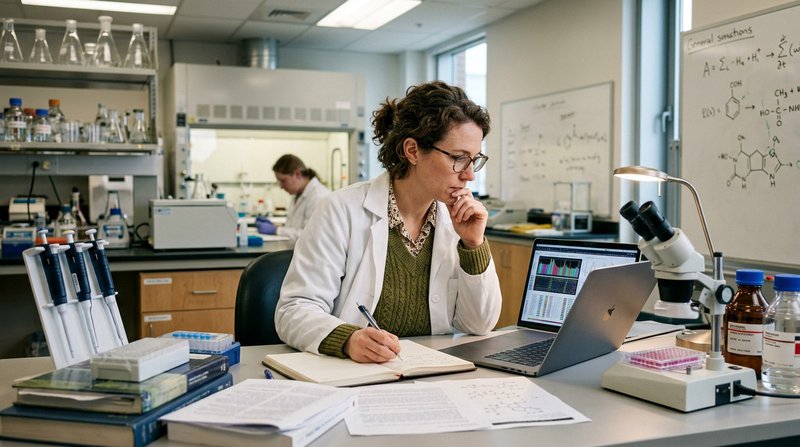
Scientists examined water from Lake Geneva and nearby rivers using a new technique called machine-learning-assisted spectral flow cytometry.
That is quite a mouthful.
In simple terms, the researchers used lasers, specialised detectors and machine learning to recognise individual plastic particles and distinguish them from naturally occurring material.
The method identified several common plastics, including:
- Polyethylene
- Polypropylene
- PET
- Polycarbonate
- Polyurethane
- PVC
It directly measured particles down to approximately five microns and allowed researchers to estimate concentrations down to one micron.
A micron is one-thousandth of a millimetre.
A human hair is generally around 50 to 100 microns wide. Many of the plastic particles identified in this research were therefore only a tiny fraction of the width of a hair.
The researchers measured between approximately 33 and 687 microplastic particles per litre in the 5-to-70-micron range. Once estimated particles down to one micron were included, average concentrations rose into the hundreds—and sometimes approached one thousand—particles per litre.
Why have previous studies missed so much plastic?
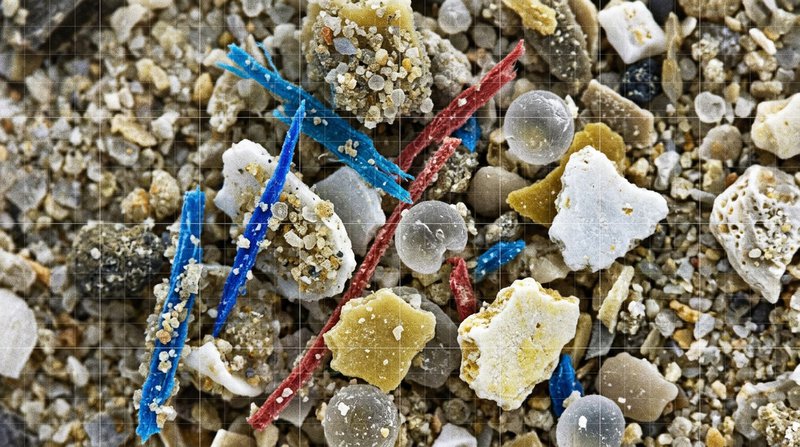
You cannot count what your equipment cannot see.
Many earlier environmental studies used nets or meshes intended to collect relatively large plastic fragments. Some commonly used meshes had openings of 100 to 350 microns.
A five-micron particle passes straight through such a net.
The new researchers found that particles became exponentially more abundant as their size decreased. They estimated that testing methods unable to identify particles below 20 microns could miss between 73% and 97% of microplastics measuring from 1 to 100 microns.
Compared with earlier lake surveys using large sampling meshes, the newly estimated concentrations were as much as 226 to 656 times higher.
That does not mean the amount of plastic suddenly increased.
It means much of it may have been present all along, hidden below the detection limit.
It is rather like looking at the night sky without a telescope and concluding that only the stars we can see exist.
Does this prove drinking water is harming us?
No—and it is important to be accurate.
The Nature study investigated natural freshwater and introduced a better measurement technique. It was not a clinical study of human health, nor did it directly test Australian household tap water.
Scientists are still investigating:
- How much microplastic enters the human body
- Whether the smallest particles cross biological barriers
- How long they remain in the body
- Whether different polymers behave differently
- The significance of chemical additives and contaminants attached to them
- The possible effects of long-term exposure
The World Health Organization previously concluded that the available evidence had not established a significant health risk from microplastics in drinking water at the concentrations then reported.
However, the WHO also emphasised that the evidence was limited—particularly for the smallest particles—and called for better measurement and more research.
That uncertainty should not create panic.
But it should not be interpreted as proof that there is nothing to consider.
If testing has overlooked most of the smallest particles, previous exposure estimates may have been incomplete.
Why ordinary filters may not be enough
Many inexpensive water filters rely almost entirely on loose granular activated carbon.
Carbon can be very useful for reducing:
- Chlorine
- Unpleasant tastes
- Odours
- Certain pesticides
- Some volatile organic chemicals
- Some disinfection by-products
But loose carbon is not automatically a reliable ultrafine particle barrier.
A basic sediment filter may stop sand, rust and visible debris while allowing much smaller particles to pass.
Microplastics measuring five, ten or twenty microns cannot be seen in a glass of water. A filter therefore needs a sufficiently fine physical barrier—not simply carbon granules in a plastic jug.
Clear water and comprehensively filtered water are not always the same thing.
Why fine filtration matters
Ultrafiltration generally uses a membrane with extremely small pores, commonly around 0.01 to 0.1 micron.
The WHO reports that ultrafiltration membranes can reject particles larger than approximately 0.01 micron. Laboratory research cited by the WHO found that polyethylene microplastics were completely rejected by the ultrafiltration membrane tested.
A 2025 study of ten drinking-water treatment facilities also found lower finished-water microplastic concentrations at plants using 0.02-micron ultrafiltration than at plants relying on microfiltration or granular-media filtration.
This illustrates an important principle:
The finer and more reliable the physical barrier, the less opportunity there is for tiny suspended particles to pass through.
However, membrane ultrafiltration is not the only way to improve protection.
A well-designed home system can combine fine filter pads, electro-adsorptive media, carbon and other specialised materials to provide several barriers within one cartridge.
That is the approach taken by the AlkaWay UltraStream.
Why we recommend the UltraStream
The UltraStream is not a basic carbon filter—and it is not a conventional ultrafiltration membrane system.
Instead, it provides a layered approach to drinking-water treatment.
The current UltraStream cartridge incorporates multiple 0.1- and 0.25-micron filter pads positioned between its different media layers. These provide fine physical filtration while also helping prevent sediment and particles from travelling through the cartridge.
Its Virus Guardian media adds another treatment mechanism. It uses electro-adsorptive and ion-exchange technology designed to help capture certain submicron contaminants without the severe flow restriction of an extremely tight membrane.
The complete cartridge also includes:
- Granular activated carbon
- Catalytic carbon
- KDF-85
- Zeolite
- Fluoride-reduction media
- Virus Guardian
- Multiple fine filter pads
- Alkalising and hydrogen-producing media
- Calcium and magnesium mineral media
This is why we recommend the UltraStream for normal treated Australian tap water.
It does much more than target visible dirt.
The system is designed to reduce chlorine, chloramine, heavy metals, fluoride and numerous other unwanted substances while also addressing fine suspended particles and microplastics.
More than microplastic filtration
A filter should not become so focused on one emerging contaminant that it ignores everything else.
Microplastics matter, but your drinking water may also contain:
- Chlorine or chloramine
- Disinfection by-products
- Pesticide residues
- Heavy metals
- PFAS
- Fluoride
- Unpleasant tastes and odours
A membrane alone may physically block particles while doing little about some dissolved chemicals unless carbon or other specialised treatment media are also included.
This is one of the UltraStream’s greatest advantages.
It does not rely on only one technology.
Its carbon media target chlorine, chloramine and a range of organic contaminants. KDF-85 helps reduce certain heavy metals. Specialised media reduce fluoride. Its fine filter pads target sediment and microplastic particles.
It then adds calcium and magnesium and produces mildly alkaline, molecular-hydrogen-infused water.
That is a very different philosophy from simply stripping everything out.
Why not use reverse osmosis?
Reverse osmosis can remove extremely small particles and many dissolved contaminants.
But it also:
- Removes most naturally occurring minerals
- Produces a wastewater stream
- Usually requires a storage tank
- Reduces the water flow
- Has several filters and a membrane to maintain
- May require remineralisation afterwards
RO has legitimate uses, particularly for salty, highly contaminated or otherwise difficult water.
For normal treated Australian municipal water, however, we generally consider it excessive.
The UltraStream uses no electricity, creates no wastewater stream and does not require a storage tank. It filters the water as you use it while preserving—and adding—beneficial mineral characteristics.
You receive filtered, mildly alkaline, hydrogen-rich water directly from the tap.
A practical alternative to bottled water
Concern about microplastics sometimes drives families away from tap water and towards bottled water.
That is not necessarily the answer.
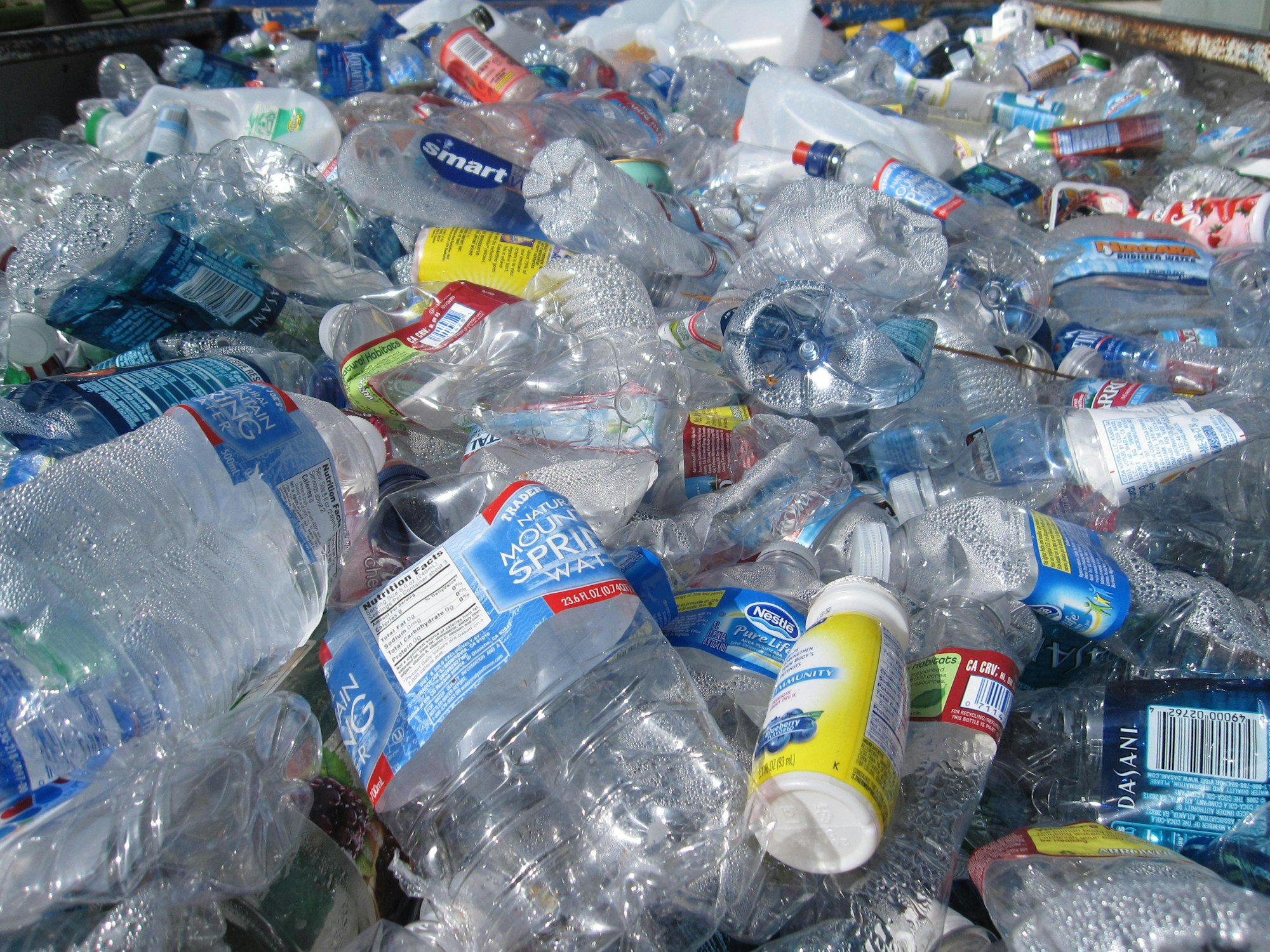
Bottled water may also contain microplastics, particularly when bottles are stored for extended periods or exposed to heat. Constantly purchasing bottled water also creates more plastic waste—the very problem we are trying to reduce.
The UltraStream provides a more practical solution:
- Filter your water at the point where you drink it.
- Avoid thousands of disposable bottles.
- Reduce unwanted contaminants.
- Retain a pleasant mineral character.
- Produce hydrogen-rich water without electricity.
- Replace the complete cartridge after approximately 3,000 litres.
Every replacement cartridge renews the filtration, alkalising and hydrogen-producing media.
What this new study really changes
The most important lesson is not that everyone should become frightened of drinking water.
It is that yesterday’s testing methods may have given us an incomplete picture.
Scientists measured the plastic particles they could conveniently collect. Now that more sensitive methods are detecting much smaller particles, estimates of microplastic pollution are rising dramatically.
We do not yet know the complete health significance.
But if up to 97% of the smallest microplastics were previously overlooked, it makes sense to take fine-particle filtration seriously.
You cannot see these particles.