
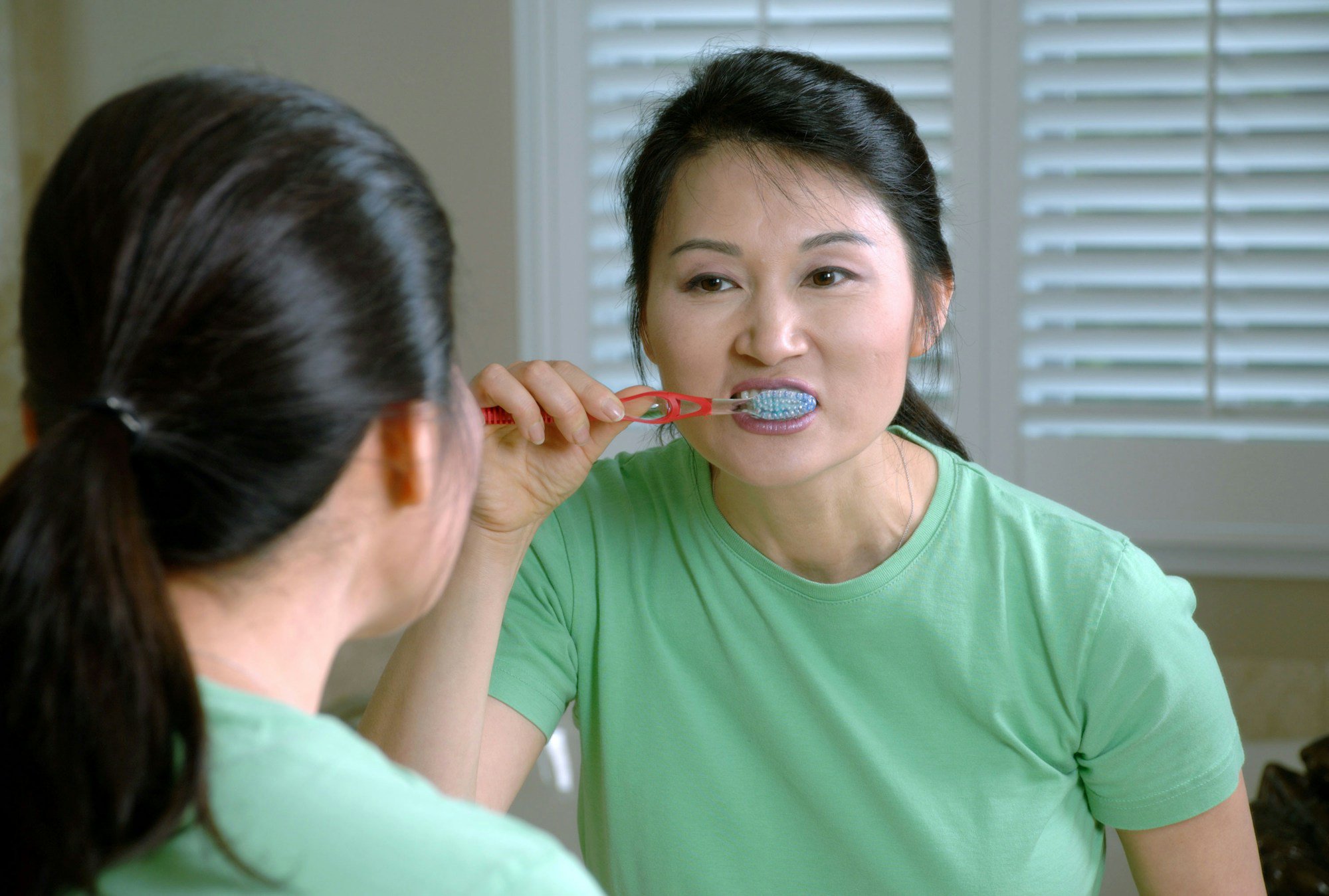
Most of us were taught that mouthwash is good for us. You swish it around, enjoy the blast of mint, and assume that the stronger the burn, the better it must be working.

But is that always true?
A recent Health Ranger article, What Your Mouthwash Label Isn’t Telling You, raises an important question: what are we regularly putting into our mouths without really thinking about it?
That question should not stop at mouthwash. In fact, it should lead us straight to the kitchen tap.
Your mouth is not a bathroom floor
The mouth contains a complex community of microorganisms. Some are troublesome. Others help maintain its natural balance.
This is why the “kill everything” approach deserves a little thought. A mouthwash may contain alcohol, strong antiseptic ingredients, artificial colours, flavours and sweeteners. Alcohol-based products can also leave some people with a dry or irritated mouth.
That doesn’t mean every mouthwash is bad. Therapeutic rinses can be useful when recommended by a dentist for a specific problem. Understand why you are using a product, follow professional advice and read the label.
In other words, do not confuse a powerful sensation with a healthy result. Your mouth does not need to feel as though it has been pressure-cleaned.
The ingredient we overlook
There is another ingredient in almost every mouthwash: water.
It is usually the first ingredient listed. Yet we focus on the mint, colour and scientific-sounding ingredients while ignoring the water carrying them.
The same thing happens at home. We worry about toothpaste, food additives and personal-care products, then fill the kettle, cooking pot and drinking glass directly from the tap without a second thought.
Australian municipal water is treated to meet public-health requirements. That treatment is essential. But “treated” does not necessarily mean “exactly how I would choose my drinking water to be.”
Chlorine or chloramine may be used to control microbes. Depending on the supply, water may also contain fluoride, traces of metals, treatment by-products and other unwanted substances.
A good filter is not a vote against safe town water. It is simply the final stage of care in your own home.
We drink far more water than mouthwash
Think about the numbers.
You might use a little mouthwash once or twice a day—and spit most of it out. But you consume water throughout the day. You drink it, cook with it and use it to make tea and coffee.
Over a year, that adds up to hundreds of litres.
So yes, examine your mouthwash label. But also ask the bigger question:
What is in the water I consume every single day?
This is where owning a quality water filter begins to make sense. It is not a complicated health ritual. It is a simple improvement to something you already do.
Why I like the UltraStream approach
After more than 26 years in the water business, I have seen products that make water filtration far more complicated—and far more expensive—than it needs to be.
The AlkaWay UltraStream takes a different approach.
It connects to a suitable kitchen tap, needs no electricity and does not send a waste stream down the drain. Its multi-stage cartridge is designed to reduce a broad range of unwanted contaminants while improving the taste and character of the water.
According to AlkaWay’s current product information, the UltraStream has been independently tested for up to 3,000 litres.
It reduces:
- Chlorine and chloramines by 99%
- Heavy metals by 99%
- Fluoride by approximately 80% over the tested cartridge life
An optional pre-filter is available for households wanting greater fluoride reduction.
The UltraStream also adds beneficial alkaline minerals, including calcium and magnesium, and infuses the water with molecular hydrogen.
That last point makes it more than an ordinary carbon filter.
Instead of only asking, “What can we remove?”, the UltraStream asks, “What qualities would we like our drinking water to have?”
I think that is a far better question.
Better water makes the healthy choice easier
One of the most underrated benefits of filtered water is taste.
When water smells of chlorine or has an unpleasant aftertaste, people often drink less of it. Or they replace it with soft drink, bottled flavoured water or yet another coffee.
When water tastes clean and fresh, drinking it becomes easier. Children may be more willing to choose it. Visitors notice the difference. Tea and coffee can taste better too.
There is also less temptation to buy single-use plastic bottles.
A filter sits quietly in the kitchen and produces better-tasting water whenever you turn it on. No cartons to carry. No cupboard full of plastic bottles. No emergency supermarket expedition because someone drank the last bottle.
Start with the things you use most
Health can become terribly complicated.
We are offered special powders, exotic berries and supplements with names that sound like minor planets.
Some may be useful. But before chasing the next miracle, it makes sense to improve the basics.
Air. Sleep. Food. Movement. Water.
If the mouthwash discussion teaches us anything, it is that repeated exposures deserve attention.
Read the label. Question unnecessary additives. Use therapeutic mouthwashes as directed by your dentist rather than assuming the strongest bottle on the shelf is automatically the best.
Then look at the biggest daily “oral-care product” of all: the water passing through your mouth and into your body.
An UltraStream will not replace brushing, flossing, dental check-ups or a dentist-prescribed rinse. Nor should it be sold as a cure for oral-health problems.
What it can do is give your household a convenient source of filtered, mineralised, hydrogen-rich water every day.
That is not a dramatic once-a-year detox.
It is something much more useful: a sensible improvement you can benefit from glass after glass, day after day.
If you would like to know whether a benchtop or undersink UltraStream suits your home, ask the AlkaWay team.
We have been helping families understand their water for more than 26 years—and we are always happy to keep the explanation refreshingly simple.