
TL;DR: A report raising concerns about chemicals associated with everyday plastics, including food packaging, clothing, toys and household products.The headline does not mean that 93% of the items in your home were tested and found dangerous. Still, there are sensible steps we can take: avoid heating food in plastic, use glass or stainless steel where practical, and ask for evidence behind claims about water filters.
I have spent much of my life asking what is in the water we drink. But there is another question worth asking: what touches that water, our food and our bodies every day?
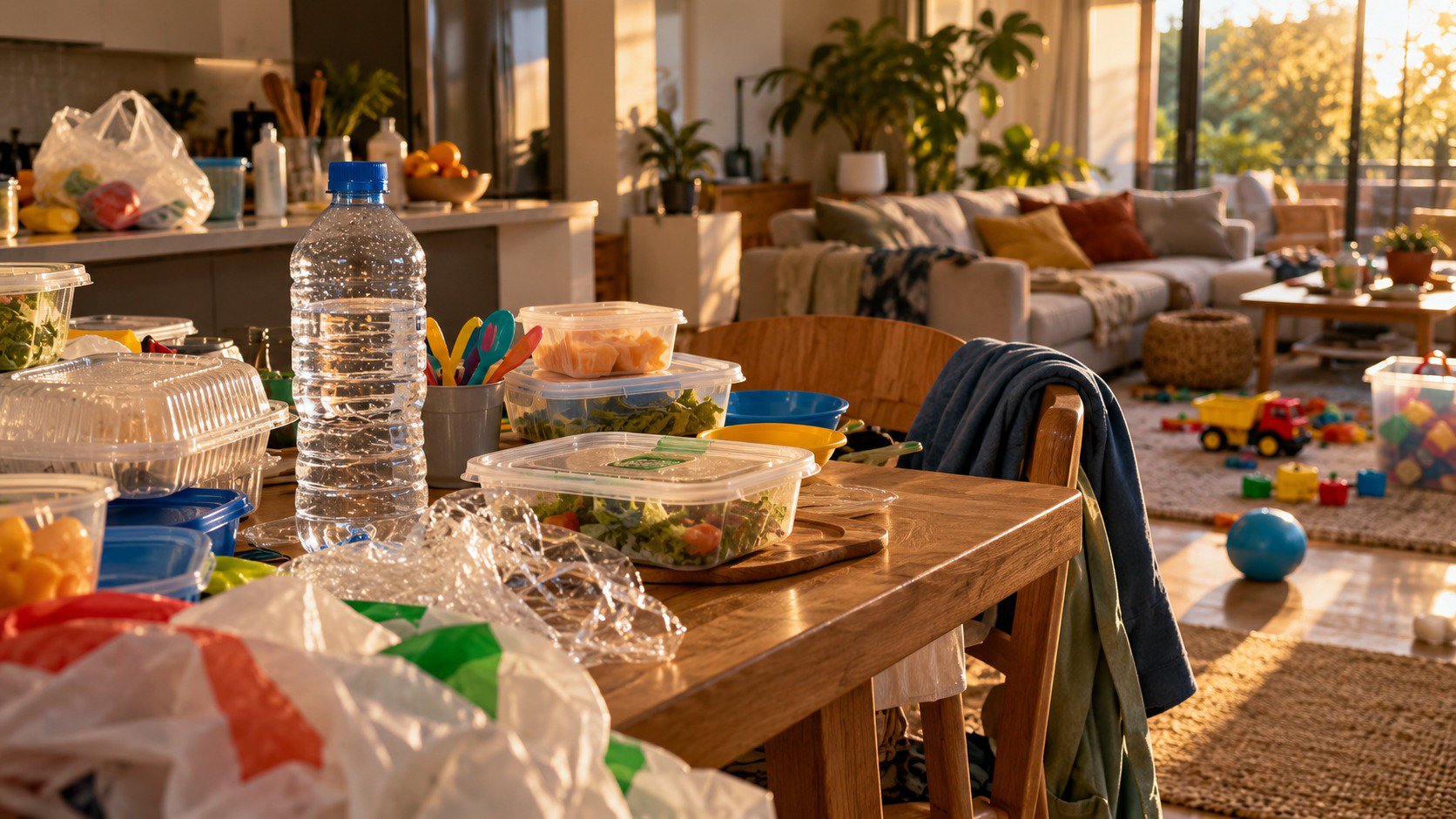
Look around the kitchen. There is the takeaway container, the plastic bottle, the microwave meal tray and perhaps a chopping board that has seen better days. Beyond the kitchen are synthetic clothes, toys and bathroom products. Plastic has become so ordinary that most of us barely notice it.
That is why this article caught my attention. It discusses a new Environmental Justice Foundation investigation based on research into chemicals associated with plastics. The underlying PlastChem project catalogued more than 16,000 chemicals potentially used or present in plastics and identified more than 4,200 as chemicals of concern. currently.att.yahoo.com
Those figures deserve attention. They also deserve careful reading. A chemical may have properties that could cause harm, but the risk from a particular household product depends on whether the chemical is in it, whether it escapes, how much reaches us and how often. The report’s percentages are not the result of testing 93% of the products sitting in our homes. currently.att.yahoo.com
What is the concern with food and drink?
There are two issues that are easy to mix up. Chemicals can migrate from packaging into food. Pieces of the packaging can also break off, including very small plastic particles. Food Standards Australia New Zealand recognises both possibilities. Researchers have observed particle release from some food containers under experimental heating conditions. That finding does not tell us that every plastic container poses the same risk in normal use. www.foodstandards.gov.au
For me, food and drinking water are sensible places to start because we use their containers repeatedly.
What would I change?
I would begin with the straightforward swaps:
- Move food out of plastic before heating it. Use a glass or ceramic dish in the microwave.
- Use glass or stainless steel for drinking water when convenient. I would also avoid leaving a plastic bottle in a hot car.
- Replace cracked or badly worn food containers, especially those used with hot food.
- Ask what a water filter has actually been tested to reduce. Plastic particles and dissolved chemicals are different targets. A claim about one does not prove a claim about the other.
That last point matters to me as the founder of AlkaWay. Filtration can help address particular concerns about water, but no water filter removes every source of exposure to plastic chemicals. Food packaging, household dust and other products are part of the picture too. If a company makes a specific removal claim, ask to see testing for that contaminant and that complete filter system.
We should also expect better information from manufacturers about the chemicals in everyday products. A shopper cannot make a fully informed choice about ingredients they are never told about.
My approach is curiosity rather than panic. Make the easy changes, follow the evidence as it develops, and keep asking a useful question: what was actually tested?